Vans Floor Set Design System
Rebuilding a manual merchandising workflow into a scalable design system.
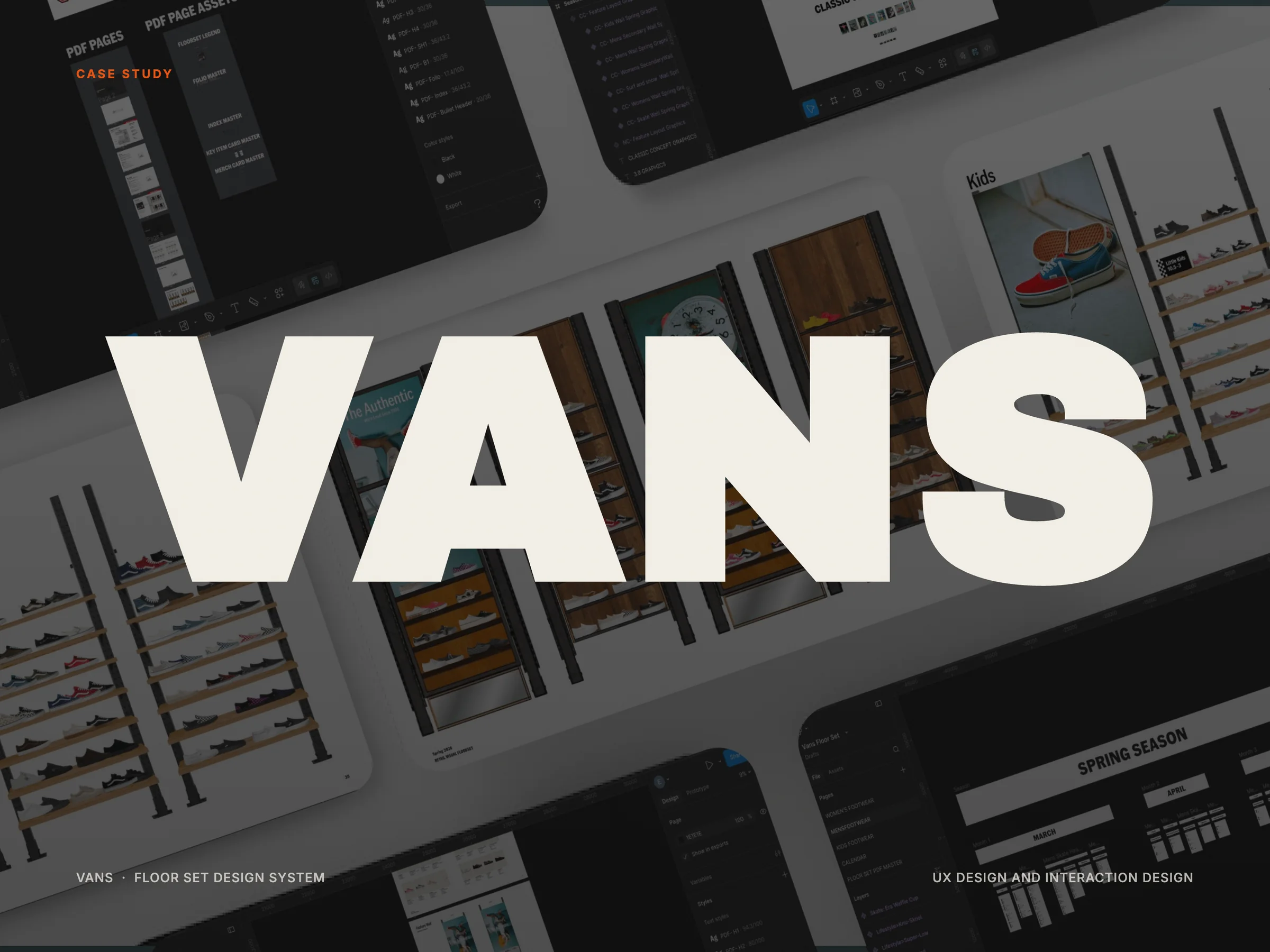
Vans' visual merchandising team was responsible for creating seasonal floor set documents that guided stores across the country on how to merchandise footwear. The process relied heavily on Adobe InDesign, requiring repetitive updates across multiple store formats, so that even small changes took hours.
As the company transitioned to Figma, the team needed more than a file conversion. They needed a system that mirrored the way they already worked while making updates faster, easier, and more scalable.
I led the design and implementation of an evergreen Figma system that transformed a repetitive production process into a flexible workflow built from reusable components.
Every seasonal update meant rebuilding layouts across multiple store concepts by hand. The team supported several unique store formats, each requiring its own floor set documentation and merchandising instructions. A single product change could result in hours of repetitive work and introduce opportunities for inconsistency across documents.
The challenge wasn't simply moving files from InDesign into Figma. The challenge was creating a system that could support the team's existing workflow while removing the friction that slowed them down.
Before designing anything, I spent nearly two months embedded with the footwear and visual merchandising teams. I observed how floor sets were created, how information moved between teams, and where the process repeatedly broke down. This research phase revealed that the biggest pain points weren't visual. They were operational.
Embed with Teams
2 months observation
Map Current Workflow
Document pain points
Identify Patterns
Operational friction
Define Requirements
System specs
A few patterns became clear:
Most importantly, this wasn't a design file problem. It was a systems problem.
Rather than recreate the old InDesign structure inside a new tool, I designed toward the patterns this research surfaced. I built an evergreen Figma system that replaced the team's InDesign workflow. Modular wall and fixture components allowed footwear to be added, swapped, or rearranged in minutes instead of rebuilt from scratch. It felt less like learning new software and more like arranging a shelf.
Interactive Merchandising
Footwear Library
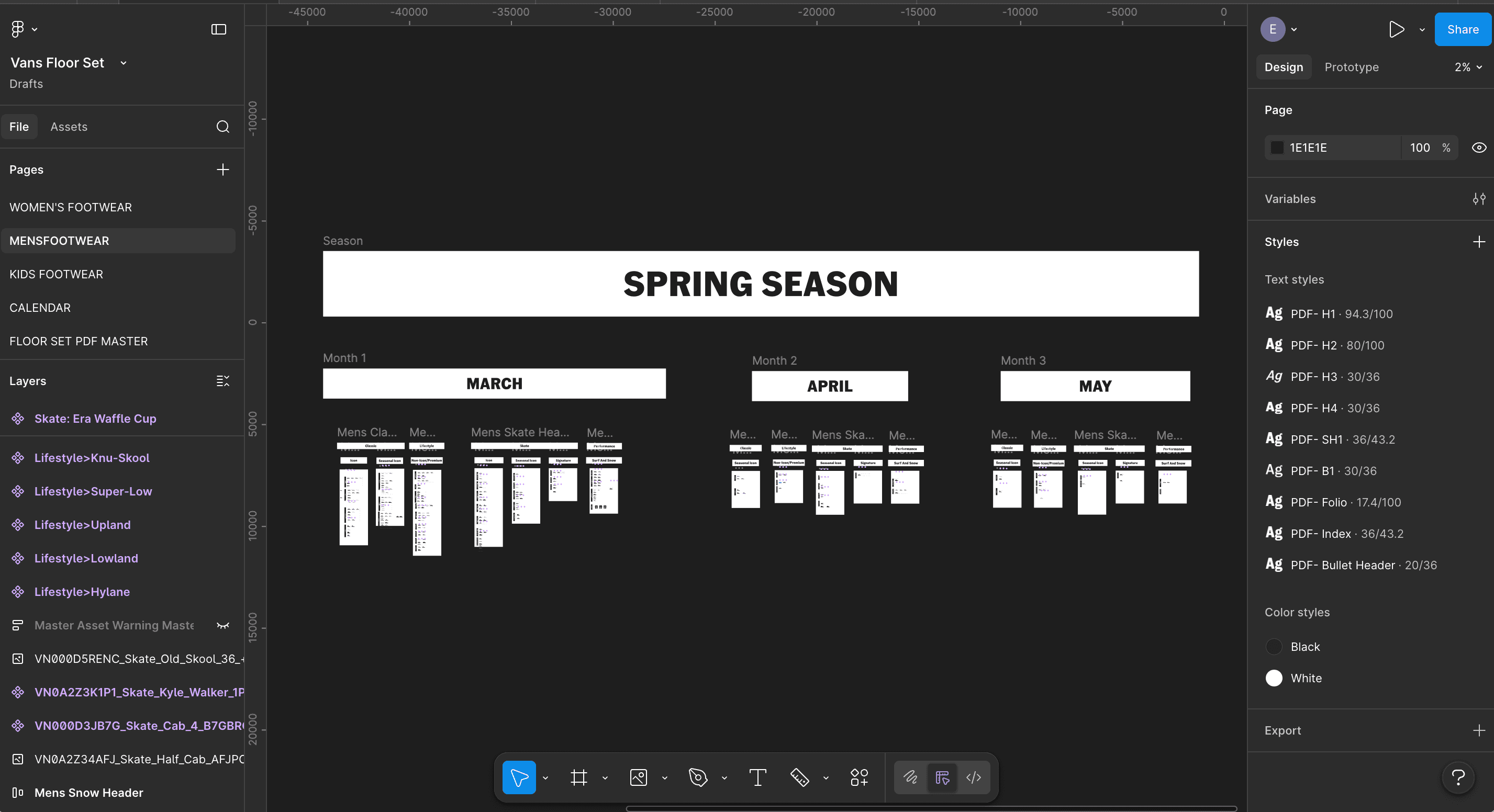
Component Variants
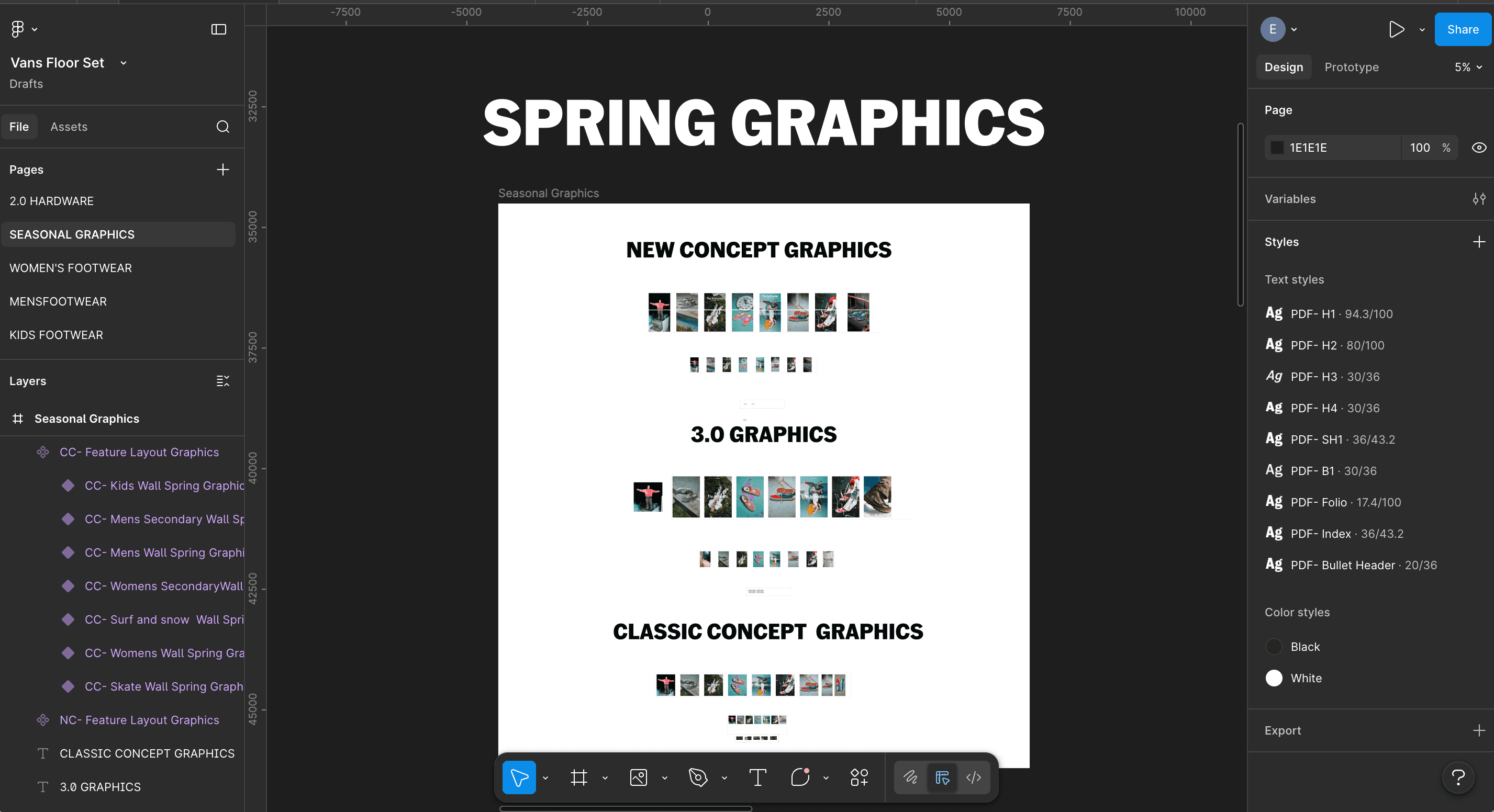
Dynamic Templates
The new system introduced modular wall and fixture components, a centralized footwear library, reusable templates across store formats, and greater consistency across seasonal floor sets. I also facilitated training sessions and led a Figma workshop to help the team transition from InDesign.
Looking back, I would bring the system to the team earlier and in rougher form instead of refining it in isolation before the first workshop. That workshop revealed a few assumptions I had made about the team's workflow. Nothing major, but enough to create rework that could have been avoided through earlier collaboration.
I would also measure how long each task took from day one. I know the system improved efficiency because I watched the team adopt it and rely on it. But I never captured the numbers from before and after, so I can't prove it.
Finally, I would document the component library as it was being built rather than after the fact. The project reinforced something I continue to believe today: the best systems don't ask people to change the way they think. They remove friction and make good work easier to do.